Breed guide
Bichon Frise
A source-linked starting point for Bichon Frise: The small but sturdy and resilient Bichon Frise stands among the world's great 'personality dogs.' Since antiquity, these irresistible canine comedians have relied on charm, beauty, and intelligence to weather history's ups and downs. Use this as context for the individual dog's routine, not as a prediction of behaviour or health.
About this breed
How to use this Bichon Frise profile
For Bichon Frise, the verified profile records Height, Weight, Life expectancy. These references explain what to observe and what to adjust in daily life; they do not establish a guaranteed behaviour rate, diagnosis, or outcome for an individual dog.
How to recognize the breed
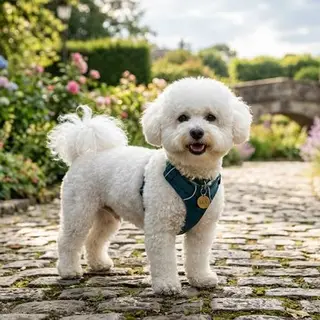
Use the whole outline, coat, proportions, and movement together. A single photo or colour is not enough to establish breed identity.
9.5-11.5 inches
AKC page PageMap DataObject > height12-18 pounds
AKC page PageMap DataObject > weight14-15 years
AKC page PageMap DataObject > life_expectancyBichons should be brushed at least two or three times a week, but every day is best. They need a bath and a clipping at least once a month. Owners who show their Bichons learn to do this, but most pet owners take their Bichon to the groomer every four to six weeks. The Bichon is considered to be relatively hypoallergenic, as the breed sheds very little…
AKC page Grooming > official section copyBody condition and trend
Height and weight references are already shown above; they are context, not a personal target. Use the BCS tool and the individual dog's ribs, waist, abdominal tuck, age, and trend.
Daily life priorities
The Bichon is classified as 'somewhat active,' but that's an average. Long stretches of calm are interspersed with brief bursts of high activity, often just running through the house or around the yard. Daily play sessions, in addition to walks, are required. Another dog can be a fine exercise companion, but the Bichon will still need quality playtime with…
AKC page Exercise > official section copyAs with all breeds, early socialization and puppy training classes are recommended. Bichons have a reputation for being difficult to housebreak. In every other respect, however, they are very easy to train. For example, Bichons love to perform tricks and learn new ones quickly. They respond very well to training based on positive rewards, rather than harsh…
AKC page Training > official section copyBichons should be brushed at least two or three times a week, but every day is best. They need a bath and a clipping at least once a month. Owners who show their Bichons learn to do this, but most pet owners take their Bichon to the groomer every four to six weeks. The Bichon is considered to be relatively hypoallergenic, as the breed sheds very little…
AKC page Grooming > official section copyAdjust difficulty, duration, and handling for the individual dog. The linked long-tail pages turn these profile facts into practical routines.
Health checks and when to call the vet
If you are choosing a puppy or checking a breeding record, ask for the named test, result, date, and scheme. These checks help assess breeding risk; they are not a diagnosis of an individual dog.
Questions owners ask about Bichon Frise
Verified facts
| Height | 9.5-11.5 inches AKC page PageMap DataObject > height |
|---|---|
| Weight | 12-18 pounds AKC page PageMap DataObject > weight |
| Life expectancy | 14-15 years AKC page PageMap DataObject > life_expectancy |
| Grooming | Bichons should be brushed at least two or three times a week, but every day is best. They need a bath and a clipping at least once a month. Owners who show their Bichons learn to do this, but most pet owners take their Bichon to the groomer every four to six weeks. The Bichon is considered to be relatively hypoallergenic, as the breed sheds very little… AKC page Grooming > official section copy |
| Exercise | The Bichon is classified as 'somewhat active,' but that's an average. Long stretches of calm are interspersed with brief bursts of high activity, often just running through the house or around the yard. Daily play sessions, in addition to walks, are required. Another dog can be a fine exercise companion, but the Bichon will still need quality playtime with… AKC page Exercise > official section copy |
| Training | As with all breeds, early socialization and puppy training classes are recommended. Bichons have a reputation for being difficult to housebreak. In every other respect, however, they are very easy to train. For example, Bichons love to perform tricks and learn new ones quickly. They respond very well to training based on positive rewards, rather than harsh… AKC page Training > official section copy |
| Official breed description | The small but sturdy and resilient Bichon Frise stands among the world's great 'personality dogs.' Since antiquity, these irresistible canine comedians have relied on charm, beauty, and intelligence to weather history's ups and downs. AKC page About the Breed > official breed description |
| Recommended parent-club health tests | ['Patella Evaluation', 'Hip Evaluation', 'Ophthalmologist Evaluation'] AKC page Health > Recommended Health Tests From the National Breed Club |
| Official breed standard | http://images.akc.org/pdf/breeds/standards/BichonFrise.pdf AKC page The Breed Standard > View Full Breed Standard |
How to use this profile
Use the facts on this page as a starting point, then observe the individual dog. A breed label does not establish behaviour frequency, diagnosis, or a guaranteed outcome. Medical and screening claims remain subject to review.
Research status
Source register
Use the tools