Breed guide
Boxer
A source-linked starting point for Boxer: Loyalty, affection, intelligence, work ethic, and good looks: Boxers are the whole doggy package. Use this as context for the individual dog's routine, not as a prediction of behaviour or health.
About this breed
How to use this Boxer profile
For Boxer, the verified profile records Height, Weight, Life expectancy. These references explain what to observe and what to adjust in daily life; they do not establish a guaranteed behaviour rate, diagnosis, or outcome for an individual dog.
How to recognize the breed
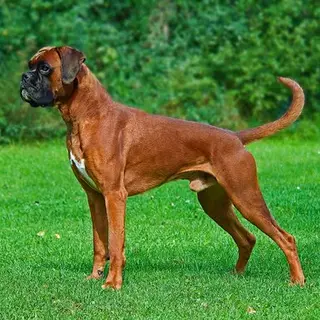
Use the whole outline, coat, proportions, and movement together. A single photo or colour is not enough to establish breed identity.
23-25 inches (male), 21.5-23.5 inches (female)
AKC page PageMap DataObject > height65-80 pounds (male), females are about 15 pounds less than male
AKC page PageMap DataObject > weight10-12 years
AKC page PageMap DataObject > life_expectancyThe Boxer's short, shiny coat requires very little grooming. A good once-over with a rubber curry-brush or a hound glove once or twice a week should keep him looking his best. The Boxer tends to be a clean dog, needing a bath only occasionally. His nails should be trimmed at least once a month unless naturally worn down on a hard surface, and to prevent…
AKC page Grooming > official section copyBody condition and trend
Height and weight references are already shown above; they are context, not a personal target. Use the BCS tool and the individual dog's ribs, waist, abdominal tuck, age, and trend.
Daily life priorities
Boxers are very playful, high-energy dogs. They need ample exercise every day, on leash or in a securely fenced area. The Boxer must never be allowed to run loose. The breed's heritage as a chaser of wild game means that they spend a good deal of time jumping and leaping about'as young dogs, they are constantly in need of reminders to teach them to stay…
AKC page Exercise > official section copyEarly socialization and puppy training classes are vital in channeling the breed's energy and exuberance in a positive way. Boxers are highly intelligent, but can become bored with repetition. They tend to have a mind of their own and are excellent problem solvers. Not always tolerant of other dogs of the same sex, most Boxers of opposite sexes enjoy each…
AKC page Training > official section copyThe Boxer's short, shiny coat requires very little grooming. A good once-over with a rubber curry-brush or a hound glove once or twice a week should keep him looking his best. The Boxer tends to be a clean dog, needing a bath only occasionally. His nails should be trimmed at least once a month unless naturally worn down on a hard surface, and to prevent…
AKC page Grooming > official section copyAdjust difficulty, duration, and handling for the individual dog. The linked long-tail pages turn these profile facts into practical routines.
Health checks and when to call the vet
If you are choosing a puppy or checking a breeding record, ask for the named test, result, date, and scheme. These checks help assess breeding risk; they are not a diagnosis of an individual dog.
Questions owners ask about Boxer
Verified facts
| Height | 23-25 inches (male), 21.5-23.5 inches (female) AKC page PageMap DataObject > height |
|---|---|
| Weight | 65-80 pounds (male), females are about 15 pounds less than male AKC page PageMap DataObject > weight |
| Life expectancy | 10-12 years AKC page PageMap DataObject > life_expectancy |
| Grooming | The Boxer's short, shiny coat requires very little grooming. A good once-over with a rubber curry-brush or a hound glove once or twice a week should keep him looking his best. The Boxer tends to be a clean dog, needing a bath only occasionally. His nails should be trimmed at least once a month unless naturally worn down on a hard surface, and to prevent… AKC page Grooming > official section copy |
| Exercise | Boxers are very playful, high-energy dogs. They need ample exercise every day, on leash or in a securely fenced area. The Boxer must never be allowed to run loose. The breed's heritage as a chaser of wild game means that they spend a good deal of time jumping and leaping about'as young dogs, they are constantly in need of reminders to teach them to stay… AKC page Exercise > official section copy |
| Training | Early socialization and puppy training classes are vital in channeling the breed's energy and exuberance in a positive way. Boxers are highly intelligent, but can become bored with repetition. They tend to have a mind of their own and are excellent problem solvers. Not always tolerant of other dogs of the same sex, most Boxers of opposite sexes enjoy each… AKC page Training > official section copy |
| Official breed description | Loyalty, affection, intelligence, work ethic, and good looks: Boxers are the whole doggy package. Bright and alert, sometimes silly, but always courageous, the Boxer has been among America's most popular dog breeds for a very long time. AKC page About the Breed > official breed description |
| Recommended parent-club health tests | ['Hip Evaluation', 'Elbow Evaluation', 'Thyroid Evaluation', 'AS/SAS Cardio', 'Aortic Valve Disease', 'Arrhythmogenic Right Ventricular Cardiomyopathy (ARVC) - DNA Test', 'Holter Monitor Testing for Boxer Cardiomyopathy, Annually'] AKC page Health > Recommended Health Tests From the National Breed Club |
| Official breed standard | http://images.akc.org/pdf/breeds/standards/Boxer.pdf AKC page The Breed Standard > View Full Breed Standard |
How to use this profile
Use the facts on this page as a starting point, then observe the individual dog. A breed label does not establish behaviour frequency, diagnosis, or a guaranteed outcome. Medical and screening claims remain subject to review.
Research status
Source register
Use the tools