Breed guide
Briard
A source-linked starting point for Briard: The Briard packs so much loyalty, love, and spirit into its ample frame that it's often described as a. Use this as context for the individual dog's routine, not as a prediction of behaviour or health.
About this breed
How to use this Briard profile
For Briard, the verified profile records Height, Weight, Life expectancy. These references explain what to observe and what to adjust in daily life; they do not establish a guaranteed behaviour rate, diagnosis, or outcome for an individual dog.
How to recognize the breed
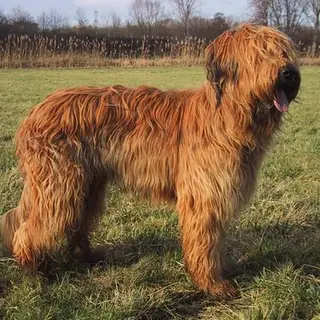
Use the whole outline, coat, proportions, and movement together. A single photo or colour is not enough to establish breed identity.
23-27 inches (male), 22-25.5 inches (female)
AKC page PageMap DataObject > height55-100 pounds
AKC page PageMap DataObject > weight12 years
AKC page PageMap DataObject > life_expectancyBegin grooming your Briard puppy long before he really needs grooming. Make sure that you make grooming time a happy period he will look forward to in the years when grooming is a necessity and can take a long time. A Briard should be brushed several times a week, completely to the skin, using a good-quality pin brush. Using an undercoat rake can help…
AKC page Grooming > official section copyBody condition and trend
Height and weight references are already shown above; they are context, not a personal target. Use the BCS tool and the individual dog's ribs, waist, abdominal tuck, age, and trend.
Daily life priorities
The Briard requires a job to be happy. Hopefully his job will be one that gives him a lot of exercise, as this is a breed that craves action. Their zest for life makes them great companions for hikers, bicyclers, and joggers. They need a large, securely fenced area where they can run free. Chasing a tennis ball thrown by his owner can help a Briard work off…
AKC page Exercise > official section copyThe Briard was bred to be able to make executive decisions without the aid of a human. Sometimes this can make them a bit difficult to train. They are eager to please, however, and when training methods are positive and the sessions kept lively, energetic, and interesting, the Briard's natural intelligence will have him at the top of the class. Briards…
AKC page Training > official section copyBegin grooming your Briard puppy long before he really needs grooming. Make sure that you make grooming time a happy period he will look forward to in the years when grooming is a necessity and can take a long time. A Briard should be brushed several times a week, completely to the skin, using a good-quality pin brush. Using an undercoat rake can help…
AKC page Grooming > official section copyAdjust difficulty, duration, and handling for the individual dog. The linked long-tail pages turn these profile facts into practical routines.
Health checks and when to call the vet
If you are choosing a puppy or checking a breeding record, ask for the named test, result, date, and scheme. These checks help assess breeding risk; they are not a diagnosis of an individual dog.
Questions owners ask about Briard
Verified facts
| Height | 23-27 inches (male), 22-25.5 inches (female) AKC page PageMap DataObject > height |
|---|---|
| Weight | 55-100 pounds AKC page PageMap DataObject > weight |
| Life expectancy | 12 years AKC page PageMap DataObject > life_expectancy |
| Grooming | Begin grooming your Briard puppy long before he really needs grooming. Make sure that you make grooming time a happy period he will look forward to in the years when grooming is a necessity and can take a long time. A Briard should be brushed several times a week, completely to the skin, using a good-quality pin brush. Using an undercoat rake can help… AKC page Grooming > official section copy |
| Exercise | The Briard requires a job to be happy. Hopefully his job will be one that gives him a lot of exercise, as this is a breed that craves action. Their zest for life makes them great companions for hikers, bicyclers, and joggers. They need a large, securely fenced area where they can run free. Chasing a tennis ball thrown by his owner can help a Briard work off… AKC page Exercise > official section copy |
| Training | The Briard was bred to be able to make executive decisions without the aid of a human. Sometimes this can make them a bit difficult to train. They are eager to please, however, and when training methods are positive and the sessions kept lively, energetic, and interesting, the Briard's natural intelligence will have him at the top of the class. Briards… AKC page Training > official section copy |
| Official breed description | The Briard packs so much loyalty, love, and spirit into its ample frame that it's often described as a AKC page About the Breed > official breed description |
| Recommended parent-club health tests | ['Hip Evaluation', 'Ophthalmologist Evaluation', 'Congenital Stationary Night Blindness (CSNB, LCA) - DNA Test'] AKC page Health > Recommended Health Tests From the National Breed Club |
| Official breed standard | http://images.akc.org/pdf/breeds/standards/Briard.pdf AKC page The Breed Standard > View Full Breed Standard |
How to use this profile
Use the facts on this page as a starting point, then observe the individual dog. A breed label does not establish behaviour frequency, diagnosis, or a guaranteed outcome. Medical and screening claims remain subject to review.
Research status
Source register
Use the tools