How to Identify an English Springer Spaniel From the Front, Side and Top
Compare the dog’s structure, head, ears, coat, and proportions from several views.
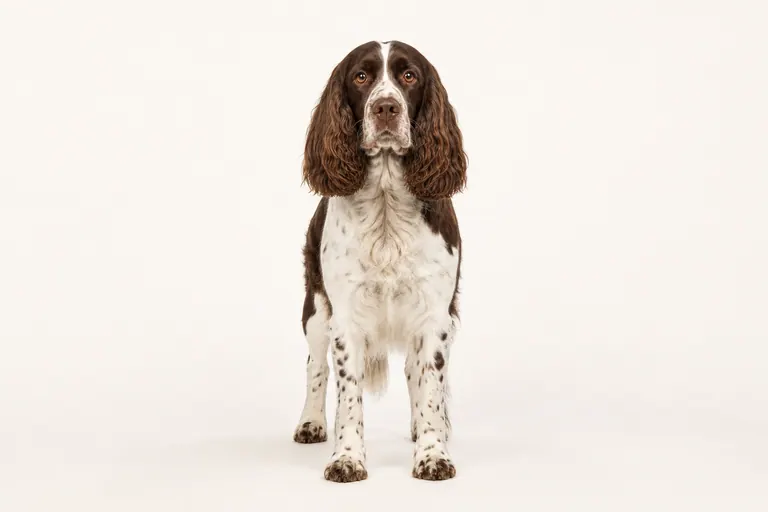
Front view
Ear set
Long, fairly wide ears hang close to the cheeks and begin roughly level with the eyes.
Head balance
The skull is fairly broad and medium in length, with a moderate stop and a clean, balanced muzzle.
Forequarters
From the front, the forelegs appear straight and the elbows lie close to the body.
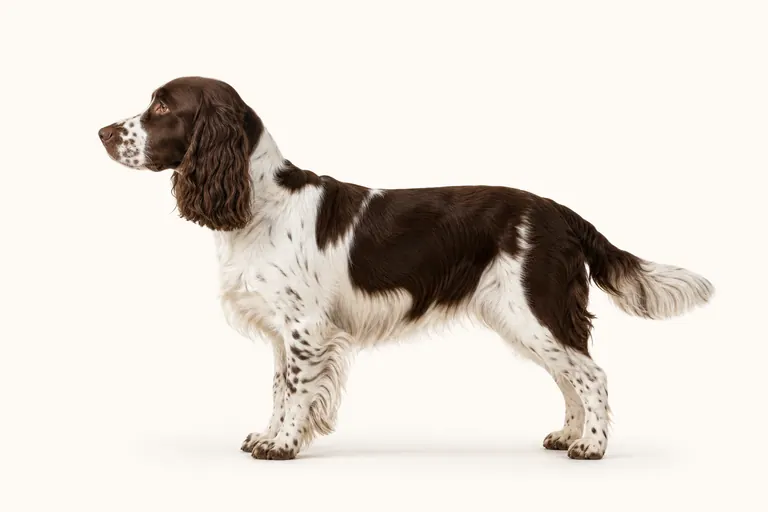
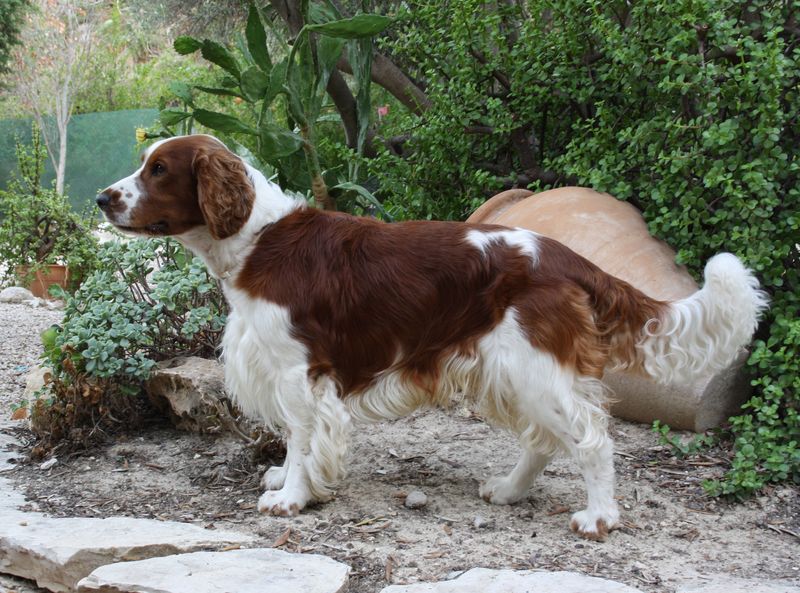
Side view
Body proportion
The body is compact and slightly longer from withers to buttocks than the dog is tall at the withers.
Chest and leg
The chest is deep and reaches the elbows without making the dog look low or heavy in front.
Coat and feathering
A flat or wavy outer coat lies over a dense undercoat, with moderate feathering on the ears, chest, legs, and belly.
Tail
Both docked and undocked tails are accepted in the current AKC standard.
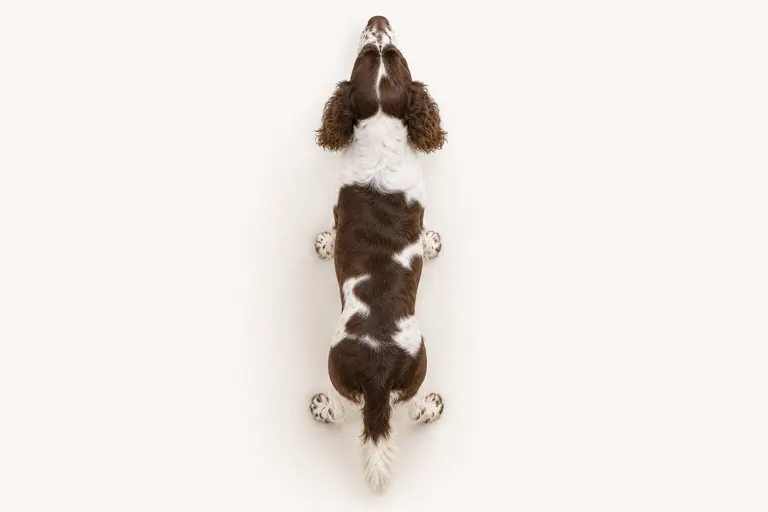
Top view
What this view can add
From above, compare left–right alignment and the transition from ribcage to loin. Stance, camera position, coat, and body condition can all change the apparent outline.
Photo setup: Use a level, centred photograph; a turned head can distort apparent ear set and muzzle balance.
Best use: Use this view for body length, chest depth, coat, feathering, and tail presentation.
Camera note: Use this view to compare symmetry and waist shape. Do not use it for exact measurements.
Coat and outline change with age and also differ between many field-bred and bench-bred dogs. Use more than one view when comparing a dog.
English Springer Spaniel vs English Cocker, Welsh Springer, Field and Bench Lines
Compare size, structure, head shape, coat, and the recurring differences between field-bred and bench-bred Springers.
Field-bred and bench-bred
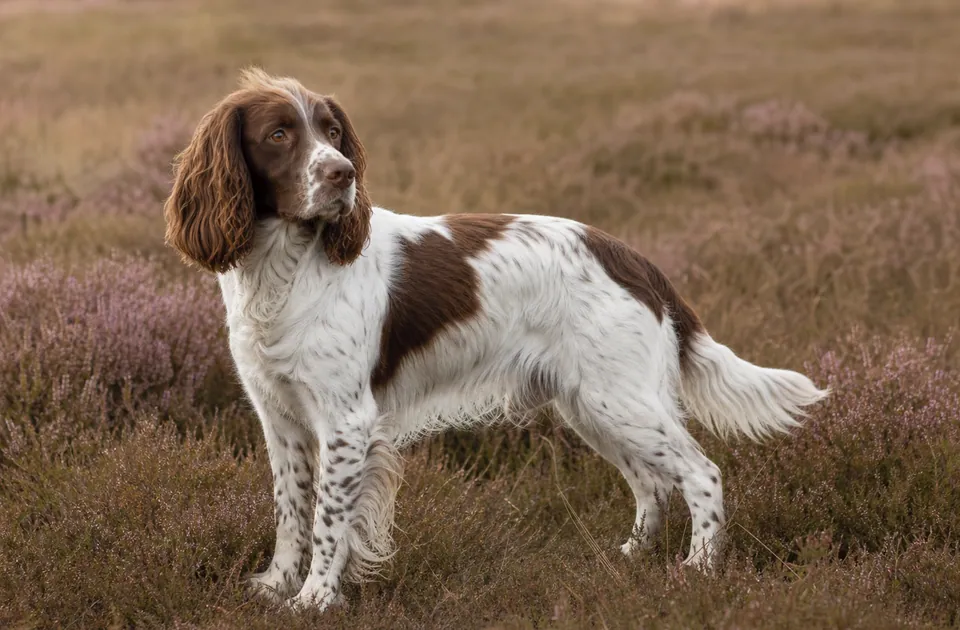
Field-bred vs bench-bred English Springer Spaniel
Field-bred Springers are often leaner, with shorter coats and ears. Bench-bred dogs often carry thicker coats and more feathering. Both belong to the same breed.
Field-bredOften leaner, with a shorter coat, shorter ears, and less feathering.
Bench-bredOften heavier-coated, with longer ears and more feathering.
Home life
Does field-bred automatically mean more difficult at home?
Field-bred dogs often carry less coat and feathering, but field or bench background does not reliably predict an individual dog’s energy or suitability as a companion.
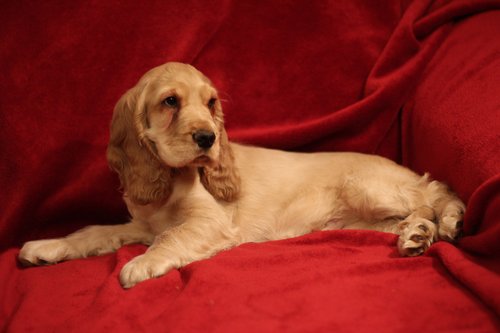
Is the dog smaller and more compact, with the English Cocker’s listed height and weight range?
English Cockers stand 15–17 in and weigh 26–34 lb. Their compact build, close-lying ears, and broad range of coat colours help separate them from Springers.
Feathering on the chest, legs, and belly can hide the waist and abdominal tuck. Look at the outline, then use your hands to check the ribs and body contours.
From aboveCompress the coat before judging the waist.
From the sideFeathering can soften the visible abdominal tuck.
By touchUse rib palpation alongside the visible outline.
Can an English Springer Spaniel live in an apartment?
Yes, with dependable daily exercise.
A Springer can live in a small house or apartment with dependable daily exercise. A fenced yard is useful, but walks, play, and time with people still matter.
How much exercise does an English Springer Spaniel need?
Plan substantial daily activity for an adult, with training or scent-based work as part of the routine.
For an adult Springer, plan substantial daily activity and include training or scent-based work. Puppy exercise needs a separate, age-appropriate plan.
Do field and bench Springers have the same coat and build?
They often differ in build, ear length, coat thickness, and feathering.
Field-bred Springers are often leaner, with shorter coats and ears. Bench-bred dogs often carry thicker coats and more feathering. Both belong to the same breed. Field-bred dogs often carry less coat and feathering, but field or bench background does not reliably predict an individual dog’s energy or suitability as a companion.
Royal Kennel Club Good Practice lists hip, elbow, and eye testing with gonioscopy for PLA, alongside prioritising genetic diversity. Royal Kennel Club Best Practice lists named DNA tests for AMS, DAMS, fucosidosis, PFK deficiency, and PRA(cord1).
Named screening or schemeScopeEvidence to request
BVA/RKC Hip Dysplasia SchemeBreeding dogsAsk for the individual hip score.
BVA/RKC Elbow Dysplasia SchemeBreeding dogsAsk for the individual elbow grade.
BVA/RKC/ISDS Eye Scheme + gonioscopyBreeding dogsAsk for the eye and PLA gonioscopy records.
AMS, DAMS, fuco, PFK and PRA(cord1) DNA testsBreeding pairAsk for each named genotype and how the proposed pairing is planned.
Review the result for each named test or scheme, along with its date where relevant. Completion alone does not mean that every result was normal.
English Springer Spaniel Questions Owners Actually Ask
A Springer puppy needs daily activity and mental stimulation, but not an adult exercise target. Keep activity age-appropriate and include play, short training, and gradual socialisation.
Regular long absences are a poor match for many Springers. Build independence gradually and arrange exercise and company when the dog would otherwise be alone for a long stretch.
Field-bred Springers are often leaner with shorter coats and less feathering, while bench-bred dogs often carry fuller coats and more feathering. The line label does not predict one individual dog’s home behaviour.