Breed guide
Great Pyrenees
A source-linked starting point for Great Pyrenees: The Great Pyrenees is a large, thickly coated, and immensely powerful working dog bred to deter sheep-stealing wolves and other predators on snowy mountaintops. Use this as context for the individual dog's routine, not as a prediction of behaviour or health.
About this breed
How to use this Great Pyrenees profile
For Great Pyrenees, the verified profile records Height, Weight, Life expectancy. These references explain what to observe and what to adjust in daily life; they do not establish a guaranteed behaviour rate, diagnosis, or outcome for an individual dog.
How to recognize the breed
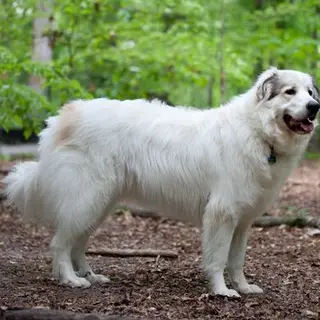
Use the whole outline, coat, proportions, and movement together. A single photo or colour is not enough to establish breed identity.
27-32 inches (male), 25-29 inches (female)
AKC page PageMap DataObject > height100 pounds & up (male), 85 pounds & up (female)
AKC page PageMap DataObject > weight10-12 years
AKC page PageMap DataObject > life_expectancyFor all their abundant fur, Pyrs don't require a lot of grooming, as their coat is dirt- and tangle-resistant. They have a double coat, with a long outer coat and a soft undercoat. They will shed this undercoat with great enthusiasm''leading to a snowstorm,' one owner says. She laughs, 'They shed in the spring, after whelping, in honor of certain Druid…
AKC page Grooming > official section copyBody condition and trend
Height and weight references are already shown above; they are context, not a personal target. Use the BCS tool and the individual dog's ribs, waist, abdominal tuck, age, and trend.
Daily life priorities
Pyrs are not a highly active breed. The breed was developed to be a livestock guardian and has been used since ancient times to protect flocks from wolves, bears, and human foes. When working, they will patrol their territory but tend to conserve their energy for fending off whatever may threaten their flock. Moderate exercise such as walks with their owner…
AKC page Exercise > official section copyPyrs were bred to be independent thinkers, to work without guidance watching and protecting their flock. Although they are intelligent, standard obedience training will be met with great indifference. They don't see the point of all that sitting, heeling, and staying. They will let their boredom show by performing any task you deem important with extremely…
AKC page Training > official section copyFor all their abundant fur, Pyrs don't require a lot of grooming, as their coat is dirt- and tangle-resistant. They have a double coat, with a long outer coat and a soft undercoat. They will shed this undercoat with great enthusiasm''leading to a snowstorm,' one owner says. She laughs, 'They shed in the spring, after whelping, in honor of certain Druid…
AKC page Grooming > official section copyAdjust difficulty, duration, and handling for the individual dog. The linked long-tail pages turn these profile facts into practical routines.
Health checks and when to call the vet
If you are choosing a puppy or checking a breeding record, ask for the named test, result, date, and scheme. These checks help assess breeding risk; they are not a diagnosis of an individual dog.
Questions owners ask about Great Pyrenees
Verified facts
| Height | 27-32 inches (male), 25-29 inches (female) AKC page PageMap DataObject > height |
|---|---|
| Weight | 100 pounds & up (male), 85 pounds & up (female) AKC page PageMap DataObject > weight |
| Life expectancy | 10-12 years AKC page PageMap DataObject > life_expectancy |
| Grooming | For all their abundant fur, Pyrs don't require a lot of grooming, as their coat is dirt- and tangle-resistant. They have a double coat, with a long outer coat and a soft undercoat. They will shed this undercoat with great enthusiasm''leading to a snowstorm,' one owner says. She laughs, 'They shed in the spring, after whelping, in honor of certain Druid… AKC page Grooming > official section copy |
| Exercise | Pyrs are not a highly active breed. The breed was developed to be a livestock guardian and has been used since ancient times to protect flocks from wolves, bears, and human foes. When working, they will patrol their territory but tend to conserve their energy for fending off whatever may threaten their flock. Moderate exercise such as walks with their owner… AKC page Exercise > official section copy |
| Training | Pyrs were bred to be independent thinkers, to work without guidance watching and protecting their flock. Although they are intelligent, standard obedience training will be met with great indifference. They don't see the point of all that sitting, heeling, and staying. They will let their boredom show by performing any task you deem important with extremely… AKC page Training > official section copy |
| Official breed description | The Great Pyrenees is a large, thickly coated, and immensely powerful working dog bred to deter sheep-stealing wolves and other predators on snowy mountaintops. Pyrs today are mellow companions and vigilant guardians of home and family. AKC page About the Breed > official breed description |
| Recommended parent-club health tests | ['Patella Evaluation', 'Hip Evaluation'] AKC page Health > Recommended Health Tests From the National Breed Club |
| Official breed standard | http://images.akc.org/pdf/breeds/standards/GreatPyrenees.pdf AKC page The Breed Standard > View Full Breed Standard |
How to use this profile
Use the facts on this page as a starting point, then observe the individual dog. A breed label does not establish behaviour frequency, diagnosis, or a guaranteed outcome. Medical and screening claims remain subject to review.
Research status
Source register
Use the tools