Breed guide
Greater Swiss Mountain Dog
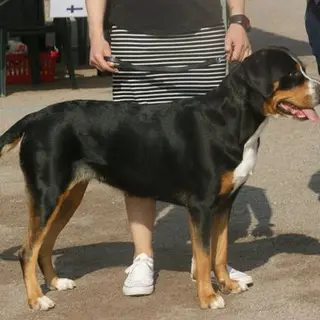
A source-linked starting point for Greater Swiss Mountain Dog: The Greater Swiss Mountain Dog is a large, immensely strong worker famous for a dense coat of striking black, red, and white markings. Use this as context for the individual dog's routine, not as a prediction of behaviour or health.
About this breed
How to use this Greater Swiss Mountain Dog profile
For Greater Swiss Mountain Dog, the verified profile records Height, Weight, Life expectancy. These references explain what to observe and what to adjust in daily life; they do not establish a guaranteed behaviour rate, diagnosis, or outcome for an individual dog.
How to recognize the breed
Use the whole outline, coat, proportions, and movement together. A single photo or colour is not enough to establish breed identity.
25.5-28.5 inches (male), 23.7-27 inches (female)
AKC page PageMap DataObject > height115-140 pounds (male), 85-110 pounds (female)
AKC page PageMap DataObject > weight8-11 years
AKC page PageMap DataObject > life_expectancyThis is basically a 'wash and wear' breed, but they are double coated and do blow their undercoat, usually twice a year. When this is occurring they benefit from a good bath and blow-out, followed by a thorough brushing with a rake or shedding tool. For the rest of the year the occasional bath and brushing usually does the trick. They need regular…
AKC page Grooming > official section copyBody condition and trend
Height and weight references are already shown above; they are context, not a personal target. Use the BCS tool and the individual dog's ribs, waist, abdominal tuck, age, and trend.
Daily life priorities
The Greater Swiss Mountain Dog requires moderate exercise. A walk around the block or a romp in the woods generally will satisfy their daily exercise needs. This breed is much better suited for the person looking for a hiking companion than the person wanting a bicycling or marathon-running partner.
AKC page Exercise > official section copyThe GSMD is very food motivated and responds well to training using food rewards. They can also have a stubborn streak, however, so their owners must be more determined than they are. It is not recommended to use any harness-type training device on this breed. They are a draft breed, and the use of a harness (other than for draft work) just tends to make…
AKC page Training > official section copyThis is basically a 'wash and wear' breed, but they are double coated and do blow their undercoat, usually twice a year. When this is occurring they benefit from a good bath and blow-out, followed by a thorough brushing with a rake or shedding tool. For the rest of the year the occasional bath and brushing usually does the trick. They need regular…
AKC page Grooming > official section copyAdjust difficulty, duration, and handling for the individual dog. The linked long-tail pages turn these profile facts into practical routines.
Health checks and when to call the vet
If you are choosing a puppy or checking a breeding record, ask for the named test, result, date, and scheme. These checks help assess breeding risk; they are not a diagnosis of an individual dog.
Questions owners ask about Greater Swiss Mountain Dog
Verified facts
| Height | 25.5-28.5 inches (male), 23.7-27 inches (female) AKC page PageMap DataObject > height |
|---|---|
| Weight | 115-140 pounds (male), 85-110 pounds (female) AKC page PageMap DataObject > weight |
| Life expectancy | 8-11 years AKC page PageMap DataObject > life_expectancy |
| Grooming | This is basically a 'wash and wear' breed, but they are double coated and do blow their undercoat, usually twice a year. When this is occurring they benefit from a good bath and blow-out, followed by a thorough brushing with a rake or shedding tool. For the rest of the year the occasional bath and brushing usually does the trick. They need regular… AKC page Grooming > official section copy |
| Exercise | The Greater Swiss Mountain Dog requires moderate exercise. A walk around the block or a romp in the woods generally will satisfy their daily exercise needs. This breed is much better suited for the person looking for a hiking companion than the person wanting a bicycling or marathon-running partner. AKC page Exercise > official section copy |
| Training | The GSMD is very food motivated and responds well to training using food rewards. They can also have a stubborn streak, however, so their owners must be more determined than they are. It is not recommended to use any harness-type training device on this breed. They are a draft breed, and the use of a harness (other than for draft work) just tends to make… AKC page Training > official section copy |
| Official breed description | The Greater Swiss Mountain Dog is a large, immensely strong worker famous for a dense coat of striking black, red, and white markings. Dependable and faithful Swissies earned their feed as herders, drafters, and all-around pasture dogs. AKC page About the Breed > official breed description |
| Recommended parent-club health tests | ['Hip Evaluation', 'Elbow Evaluation', 'Ophthalmologist Evaluation', 'Shoulder Evaluation'] AKC page Health > Recommended Health Tests From the National Breed Club |
| Official breed standard | http://images.akc.org/pdf/breeds/standards/GreaterSwissMountainDog.pdf AKC page The Breed Standard > View Full Breed Standard |
How to use this profile
Use the facts on this page as a starting point, then observe the individual dog. A breed label does not establish behaviour frequency, diagnosis, or a guaranteed outcome. Medical and screening claims remain subject to review.
Research status
Source register
Use the tools