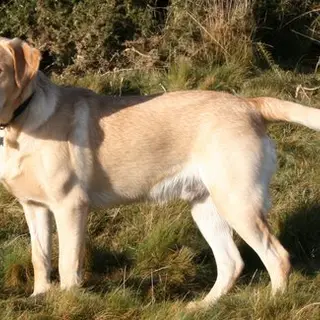
Breed guide
Labrador Retriever
A source-linked starting point for Labrador Retriever: The sweet-faced, lovable Labrador Retriever is one of America's most popular dog breeds, year after year. Use this as context for the individual dog's routine, not as a prediction of behaviour or health.
About this breed
How to use this Labrador Retriever profile
For Labrador Retriever, the verified profile records Height, Weight, Life expectancy. These references explain what to observe and what to adjust in daily life; they do not establish a guaranteed behaviour rate, diagnosis, or outcome for an individual dog.
How to recognize the breed
Use the whole outline, coat, proportions, and movement together. A single photo or colour is not enough to establish breed identity.
22.5-24.5 inches (male), 21.5-23.5 inches (female)
AKC page PageMap DataObject > height65-80 pounds (male), 55-70 pounds (female)
AKC page PageMap DataObject > weight11-13 years
AKC page PageMap DataObject > life_expectancyThe Lab has a thick, water-repellant double coat that sheds. Give occasional baths to keep them clean. As with all breeds, the Lab's nails should be trimmed regularly and his teeth brushed frequently.
AKC page Grooming > official section copyBody condition and trend
Height and weight references are already shown above; they are context, not a personal target. Use the BCS tool and the individual dog's ribs, waist, abdominal tuck, age, and trend.
Daily life priorities
The Labrador Retriever is an exuberant, very energetic breed that needs lots of exercise every day. A Lab who doesn't get enough exercise is likely to engage in hyperactive and/or destructive behavior to release pent-up energy. The breed's favorite activities are retrieving and swimming. Labs also love to burn up energy on hunting trips or at field trials,…
AKC page Exercise > official section copyWith the Lab's physical strength and high energy level, early socialization and puppy training classes are vital. Gently exposing the puppy to a wide variety of people, places, and situations between the ages of 7 weeks and 4 months and beginning obedience training early on will help him develop into a well-adjusted, well-mannered adult. Puppy training…
AKC page Training > official section copyThe Lab has a thick, water-repellant double coat that sheds. Give occasional baths to keep them clean. As with all breeds, the Lab's nails should be trimmed regularly and his teeth brushed frequently.
AKC page Grooming > official section copyAdjust difficulty, duration, and handling for the individual dog. The linked long-tail pages turn these profile facts into practical routines.
Health checks and when to call the vet
If you are choosing a puppy or checking a breeding record, ask for the named test, result, date, and scheme. These checks help assess breeding risk; they are not a diagnosis of an individual dog.
Questions owners ask about Labrador Retriever
Verified facts
| Height | 22.5-24.5 inches (male), 21.5-23.5 inches (female) AKC page PageMap DataObject > height |
|---|---|
| Weight | 65-80 pounds (male), 55-70 pounds (female) AKC page PageMap DataObject > weight |
| Life expectancy | 11-13 years AKC page PageMap DataObject > life_expectancy |
| Grooming | The Lab has a thick, water-repellant double coat that sheds. Give occasional baths to keep them clean. As with all breeds, the Lab's nails should be trimmed regularly and his teeth brushed frequently. AKC page Grooming > official section copy |
| Exercise | The Labrador Retriever is an exuberant, very energetic breed that needs lots of exercise every day. A Lab who doesn't get enough exercise is likely to engage in hyperactive and/or destructive behavior to release pent-up energy. The breed's favorite activities are retrieving and swimming. Labs also love to burn up energy on hunting trips or at field trials,… AKC page Exercise > official section copy |
| Training | With the Lab's physical strength and high energy level, early socialization and puppy training classes are vital. Gently exposing the puppy to a wide variety of people, places, and situations between the ages of 7 weeks and 4 months and beginning obedience training early on will help him develop into a well-adjusted, well-mannered adult. Puppy training… AKC page Training > official section copy |
| Official breed description | The sweet-faced, lovable Labrador Retriever is one of America's most popular dog breeds, year after year. Labs are friendly, outgoing, and high-spirited companions who have more than enough affection to go around for a family looking for a medium-to-large dog. AKC page About the Breed > official breed description |
| Recommended parent-club health tests | ['Hip Evaluation', 'Elbow Evaluation', 'Ophthalmologist Evaluation', 'D Locus (Dilute) - DNA Test', 'Centronuclear Myopathy (CNM) - DNA Test', 'Progressive Retinal Atrophy, PRCD (PRA-prcd, PRCD) - DNA Test', 'Exercise-Induced Collapse (EIC) - DNA Test'] AKC page Health > Recommended Health Tests From the National Breed Club |
| Official breed standard | http://images.akc.org/pdf/breeds/standards/LabradorRetriever.pdf AKC page The Breed Standard > View Full Breed Standard |
How to use this profile
Use the facts on this page as a starting point, then observe the individual dog. A breed label does not establish behaviour frequency, diagnosis, or a guaranteed outcome. Medical and screening claims remain subject to review.
Research status
Source register
Use the tools