Breed guide
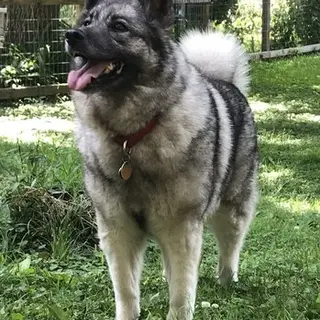
Norwegian Elkhound
A source-linked starting point for Norwegian Elkhound: The Norwegian Elkhound is a robust spitz type known for his lush silver-gray coat and dignified but friendly demeanor. Use this as context for the individual dog's routine, not as a prediction of behaviour or health.
About this breed
How to use this Norwegian Elkhound profile
For Norwegian Elkhound, the verified profile records Height, Weight, Life expectancy. These references explain what to observe and what to adjust in daily life; they do not establish a guaranteed behaviour rate, diagnosis, or outcome for an individual dog.
How to recognize the breed
Use the whole outline, coat, proportions, and movement together. A single photo or colour is not enough to establish breed identity.
20.5 inches (male), 19.5 inches (female)
AKC page PageMap DataObject > height55 pounds (male), 48 pounds (female)
AKC page PageMap DataObject > weight12-15 years
AKC page PageMap DataObject > life_expectancyThe Norwegian Elkhound has a 'two-ply' coat, with a top coat and an undercoat. Elkhound breeders warn potential puppy buyers of the inevitable'that during shedding season they will have 'tumbleweeds' of silver undercoat rolling around their house. The outer coat will shed as well, but not to the degree that the undercoat will. A slicker brush will…
AKC page Grooming > official section copyBody condition and trend
Height and weight references are already shown above; they are context, not a personal target. Use the BCS tool and the individual dog's ribs, waist, abdominal tuck, age, and trend.
Daily life priorities
These are hunting dogs in their native Norway. They track and follow moose, ranging far ahead of the hunter, and they must be able to trot many miles for several days if necessary. Because they must make their own decisions when hunting, and by virtue of the way they hunt, they are independent and lovers of the woods and their freedom. For that reason, when…
AKC page Exercise > official section copyThis breed does not tend to be a star performer in the obedience ring. The Elkhound learns very quickly, being highly intelligent, but after this learning process it becomes, 'Didn't we already do this 12 times?' The other difficulty in training this breed for activities is their independent nature, inspired by their hunting traits. As far as simple house…
AKC page Training > official section copyThe Norwegian Elkhound has a 'two-ply' coat, with a top coat and an undercoat. Elkhound breeders warn potential puppy buyers of the inevitable'that during shedding season they will have 'tumbleweeds' of silver undercoat rolling around their house. The outer coat will shed as well, but not to the degree that the undercoat will. A slicker brush will…
AKC page Grooming > official section copyAdjust difficulty, duration, and handling for the individual dog. The linked long-tail pages turn these profile facts into practical routines.
Health checks and when to call the vet
If you are choosing a puppy or checking a breeding record, ask for the named test, result, date, and scheme. These checks help assess breeding risk; they are not a diagnosis of an individual dog.
Questions owners ask about Norwegian Elkhound
Verified facts
| Height | 20.5 inches (male), 19.5 inches (female) AKC page PageMap DataObject > height |
|---|---|
| Weight | 55 pounds (male), 48 pounds (female) AKC page PageMap DataObject > weight |
| Life expectancy | 12-15 years AKC page PageMap DataObject > life_expectancy |
| Grooming | The Norwegian Elkhound has a 'two-ply' coat, with a top coat and an undercoat. Elkhound breeders warn potential puppy buyers of the inevitable'that during shedding season they will have 'tumbleweeds' of silver undercoat rolling around their house. The outer coat will shed as well, but not to the degree that the undercoat will. A slicker brush will… AKC page Grooming > official section copy |
| Exercise | These are hunting dogs in their native Norway. They track and follow moose, ranging far ahead of the hunter, and they must be able to trot many miles for several days if necessary. Because they must make their own decisions when hunting, and by virtue of the way they hunt, they are independent and lovers of the woods and their freedom. For that reason, when… AKC page Exercise > official section copy |
| Training | This breed does not tend to be a star performer in the obedience ring. The Elkhound learns very quickly, being highly intelligent, but after this learning process it becomes, 'Didn't we already do this 12 times?' The other difficulty in training this breed for activities is their independent nature, inspired by their hunting traits. As far as simple house… AKC page Training > official section copy |
| Official breed description | The Norwegian Elkhound is a robust spitz type known for his lush silver-gray coat and dignified but friendly demeanor. The durable Elkhound is among Europe's oldest dogs. They sailed with the Vikings and figure in Norse art and legend. AKC page About the Breed > official breed description |
| Recommended parent-club health tests | ['Hip Evaluation', 'Ophthalmologist Evaluation'] AKC page Health > Recommended Health Tests From the National Breed Club |
| Official breed standard | http://images.akc.org/pdf/breeds/standards/NorwegianElkhound.pdf AKC page The Breed Standard > View Full Breed Standard |
How to use this profile
Use the facts on this page as a starting point, then observe the individual dog. A breed label does not establish behaviour frequency, diagnosis, or a guaranteed outcome. Medical and screening claims remain subject to review.
Research status
Source register
Use the tools