Breed guide
Papillon
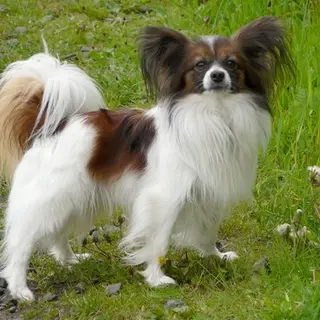
A source-linked starting point for Papillon: The quick, curious Papillon is a toy dog of singular beauty and upbeat athleticism. Use this as context for the individual dog's routine, not as a prediction of behaviour or health.
About this breed
How to use this Papillon profile
For Papillon, the verified profile records Height, Weight, Life expectancy. These references explain what to observe and what to adjust in daily life; they do not establish a guaranteed behaviour rate, diagnosis, or outcome for an individual dog.
How to recognize the breed
Use the whole outline, coat, proportions, and movement together. A single photo or colour is not enough to establish breed identity.
8-11 inches
AKC page PageMap DataObject > height5-10 pounds
AKC page PageMap DataObject > weight14-16 years
AKC page PageMap DataObject > life_expectancyFor a breed with long, silky hair, Papillons needs surprisingly little grooming, mostly because they do not have an undercoat. Grooming every month or so is fine. Between full grooming sessions, you might want to spend a few minutes running a comb or soft slicker brush through the hair inside the hind legs, behind the ears, and on the
AKC page Grooming > official section copyBody condition and trend
Height and weight references are already shown above; they are context, not a personal target. Use the BCS tool and the individual dog's ribs, waist, abdominal tuck, age, and trend.
Daily life priorities
Thanks to their small size, Papillons make wonderful indoor pets, but that doesn't mean they don't need exercise. They are active, smart dogs, and they will want their people to play with them. Indoors, they enjoy retrieving a small ball or toy'a Papillon will quickly learn to bring it back so you can throw it again. Outdoors, true to their spaniel…
AKC page Exercise > official section copyPapillons are intelligent and eager to please the humans they have bonded with. Generally speaking, some small breeds can take a little longer to housetrain than large breeds do, but Papillons make the process easier. Early socializationis very important, and obedience classes are a good idea'your Papillon will learn to do what you tell him to, and you will…
AKC page Training > official section copyFor a breed with long, silky hair, Papillons needs surprisingly little grooming, mostly because they do not have an undercoat. Grooming every month or so is fine. Between full grooming sessions, you might want to spend a few minutes running a comb or soft slicker brush through the hair inside the hind legs, behind the ears, and on the
AKC page Grooming > official section copyAdjust difficulty, duration, and handling for the individual dog. The linked long-tail pages turn these profile facts into practical routines.
Health checks and when to call the vet
If you are choosing a puppy or checking a breeding record, ask for the named test, result, date, and scheme. These checks help assess breeding risk; they are not a diagnosis of an individual dog.
Questions owners ask about Papillon
Verified facts
| Height | 8-11 inches AKC page PageMap DataObject > height |
|---|---|
| Weight | 5-10 pounds AKC page PageMap DataObject > weight |
| Life expectancy | 14-16 years AKC page PageMap DataObject > life_expectancy |
| Grooming | For a breed with long, silky hair, Papillons needs surprisingly little grooming, mostly because they do not have an undercoat. Grooming every month or so is fine. Between full grooming sessions, you might want to spend a few minutes running a comb or soft slicker brush through the hair inside the hind legs, behind the ears, and on the AKC page Grooming > official section copy |
| Exercise | Thanks to their small size, Papillons make wonderful indoor pets, but that doesn't mean they don't need exercise. They are active, smart dogs, and they will want their people to play with them. Indoors, they enjoy retrieving a small ball or toy'a Papillon will quickly learn to bring it back so you can throw it again. Outdoors, true to their spaniel… AKC page Exercise > official section copy |
| Training | Papillons are intelligent and eager to please the humans they have bonded with. Generally speaking, some small breeds can take a little longer to housetrain than large breeds do, but Papillons make the process easier. Early socializationis very important, and obedience classes are a good idea'your Papillon will learn to do what you tell him to, and you will… AKC page Training > official section copy |
| Official breed description | The quick, curious Papillon is a toy dog of singular beauty and upbeat athleticism. Despite his refined appearance, the Pap is truly a 'doggy dog' blessed with a hardy constitution. Papillon fanciers describe their breed as happy, alert, and friendly. AKC page About the Breed > official breed description |
| Recommended parent-club health tests | ['Patella Evaluation', 'Cardiac Exam', 'Ophthalmologist Evaluation'] AKC page Health > Recommended Health Tests From the National Breed Club |
| Official breed standard | http://images.akc.org/pdf/breeds/standards/Papillon.pdf AKC page The Breed Standard > View Full Breed Standard |
How to use this profile
Use the facts on this page as a starting point, then observe the individual dog. A breed label does not establish behaviour frequency, diagnosis, or a guaranteed outcome. Medical and screening claims remain subject to review.
Research status
Source register
Use the tools