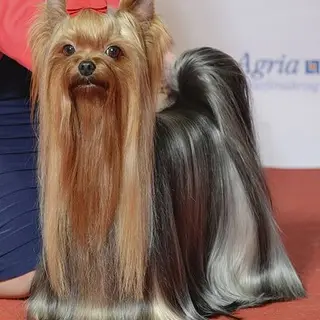
Breed guide
Yorkshire Terrier
A source-linked starting point for Yorkshire Terrier: Beneath the dainty, glossy, floor-length coat of a Yorkshire Terrier beats the heart of a feisty, old-time terrier. Use this as context for the individual dog's routine, not as a prediction of behaviour or health.
About this breed
How to use this Yorkshire Terrier profile
For Yorkshire Terrier, the verified profile records Height, Weight, Life expectancy. These references explain what to observe and what to adjust in daily life; they do not establish a guaranteed behaviour rate, diagnosis, or outcome for an individual dog.
How to recognize the breed
Use the whole outline, coat, proportions, and movement together. A single photo or colour is not enough to establish breed identity.
7-8 inches
AKC page PageMap DataObject > height7 pounds
AKC page PageMap DataObject > weight11-15 years
AKC page PageMap DataObject > life_expectancyThe Yorkshire Terrier's coat is very similar to human hair and should be treated accordingly. If the coat is kept long, it needs to be brushed daily. To avoid eye irritation, the hair on the upper part of the head should be trimmed short or pulled up into a topknot. The Yorkie will need a bath every week or so. Check the ears weekly for any debris or signs…
AKC page Grooming > official section copyBody condition and trend
Height and weight references are already shown above; they are context, not a personal target. Use the BCS tool and the individual dog's ribs, waist, abdominal tuck, age, and trend.
Daily life priorities
Even small dogs require exercise to stay healthy, both mentally and physically. Yorkies will benefit from both moderate exercise, such as walks with their owner at a steady pace, as well as occasional short bursts of activity, such as chasing after a tennis ball in the backyard. A short walk twice a day will likely be enough for your Yorkie to see new…
AKC page Exercise > official section copyYorkies love their owners, and are very intelligent and eager to please. Offering effusive praise and treats for good behavior will work far better with the Yorkie than harsh corrections. Starting from an early age, the Yorkie should be socialized to strange situations, people, and other dogs. Take him into new situations slowly, and always in a calm and…
AKC page Training > official section copyThe Yorkshire Terrier's coat is very similar to human hair and should be treated accordingly. If the coat is kept long, it needs to be brushed daily. To avoid eye irritation, the hair on the upper part of the head should be trimmed short or pulled up into a topknot. The Yorkie will need a bath every week or so. Check the ears weekly for any debris or signs…
AKC page Grooming > official section copyAdjust difficulty, duration, and handling for the individual dog. The linked long-tail pages turn these profile facts into practical routines.
Health checks and when to call the vet
If you are choosing a puppy or checking a breeding record, ask for the named test, result, date, and scheme. These checks help assess breeding risk; they are not a diagnosis of an individual dog.
Questions owners ask about Yorkshire Terrier
Verified facts
| Height | 7-8 inches AKC page PageMap DataObject > height |
|---|---|
| Weight | 7 pounds AKC page PageMap DataObject > weight |
| Life expectancy | 11-15 years AKC page PageMap DataObject > life_expectancy |
| Grooming | The Yorkshire Terrier's coat is very similar to human hair and should be treated accordingly. If the coat is kept long, it needs to be brushed daily. To avoid eye irritation, the hair on the upper part of the head should be trimmed short or pulled up into a topknot. The Yorkie will need a bath every week or so. Check the ears weekly for any debris or signs… AKC page Grooming > official section copy |
| Exercise | Even small dogs require exercise to stay healthy, both mentally and physically. Yorkies will benefit from both moderate exercise, such as walks with their owner at a steady pace, as well as occasional short bursts of activity, such as chasing after a tennis ball in the backyard. A short walk twice a day will likely be enough for your Yorkie to see new… AKC page Exercise > official section copy |
| Training | Yorkies love their owners, and are very intelligent and eager to please. Offering effusive praise and treats for good behavior will work far better with the Yorkie than harsh corrections. Starting from an early age, the Yorkie should be socialized to strange situations, people, and other dogs. Take him into new situations slowly, and always in a calm and… AKC page Training > official section copy |
| Official breed description | Beneath the dainty, glossy, floor-length coat of a Yorkshire Terrier beats the heart of a feisty, old-time terrier. Yorkies earned their living as ratters in mines and mills long before they became the beribboned lapdogs of Victorian ladies. AKC page About the Breed > official breed description |
| Recommended parent-club health tests | ['Patella Evaluation', 'Ophthalmologist Evaluation'] AKC page Health > Recommended Health Tests From the National Breed Club |
| Official breed standard | http://images.akc.org/pdf/breeds/standards/YorkshireTerrier.pdf AKC page The Breed Standard > View Full Breed Standard |
How to use this profile
Use the facts on this page as a starting point, then observe the individual dog. A breed label does not establish behaviour frequency, diagnosis, or a guaranteed outcome. Medical and screening claims remain subject to review.
Research status
Source register
Use the tools